
Tue, April 10, 2017
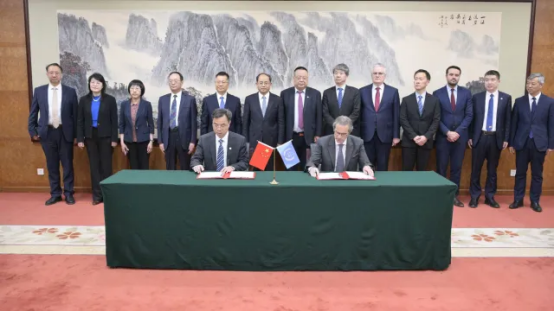
The IAEA designated CNNC Medical as a Rays of Hope Anchor Centre to strengthen cancer care through expanded access to nuclear medicine. (Photo: Zhou Chun/China Atomic Energy Agency)
The IAEA has designated the China National Nuclear Corporation Medical Industry Co., Ltd. (CNNC Medical) as its 20th Rays of Hope Anchor Centre, building on a long-standing partnership.
The designation will strengthen capacity-building, regional training and quality management in nuclear medicine and radiotherapy, supporting the initiative’s aim to expand equitable access to cancer care worldwide.
Anchor Centres are regional hubs that provide advanced cancer care and training. They are selected based on strong clinical infrastructure, robust quality management systems and strong training and research capacity. These centres often have extensive experience collaborating with the IAEA through Coordinated Research Projects (CRPs) and training programmes.
“The network of anchor centres is a cornerstone in accelerating equitable access to cancer care at national, regional and interregional levels,” said May Abdel-Wahab, IAEA’s Director of Human Health. “Anchor Centres deliver specialized training and fellowships for healthcare professionals, organize regional capacity-building activities, contribute to coordinated research projects, and provide technical expertise, mentorship and support to radiotherapy and medical imaging facilities in their respective regions.”
About CNNC Medical
Established in 2015, CNNC Medical is the healthcare and medical industry arm of the China National Nuclear Corporation (CNNC). The organization develops nuclear medical applications and supports China’s nuclear emergency medical security system. CNNC Medical operates seven hospitals in China, with a specialized focus on nuclear medicine, molecular imaging, advanced radiotherapy and primary healthcare.
CNNC Medical draws on CNNC’s capabilities across the nuclear industry, from isotope production and radiopharmaceutical research, development and manufacturing, to capacity building and Engineering, Procurement and Construction (EPC) of nuclear sites.
The IAEA and CNNC Medical have maintained a long-standing technical partnership focused on information exchange, scientific visits and capacity building in nuclear medicine. In 2023, a Practical Arrangement was signed between CNNC and the IAEA to support the Rays of Hope Initiative. Under this framework, CNNC Medical has participated in multiple IAEA CRPs focusing on teletherapy, breast cancer management and radiation-induced lung injuries.

CNNC Medical hosted several capacity building activities in radiation medicine in partnership with the IAEA, including an IAEA Group Fellowship Training for Radiotherapy Physicists in 2024. (Photo: The Nuclear Industry 416 Hospital/CNNC)
Building Regional Expertise in Cancer Care
CNNC Medical has hosted capacity-building activities in radiotherapy, radiation oncology and medical physics, welcoming participants from across the region and other low- and middle-income countries (LMICs).
In 2024 and 2025, CNNC Medical hosted two consecutive radiotherapy medical physics training courses, with a third scheduled for 2026. It has also hosted the Regional Training Course on Quality Assurance Teams for Radiation Oncology (QUATRO) and the 2025 IAEA Clinical on-the-Job training for medical physicists.
"Becoming a Rays of Hope Anchor Centre is both a profound honour and a natural evolution of our long-term partnership with the IAEA," said Zhu Qiang, the then-Vice President of CNNC Medical. "Following this designation, CNNC Medical will expand its ongoing collaboration with the IAEA, strengthen capacity building in radiation medicine in order to benefit more patients from the region and beyond. It also provides more opportunities for physicians, medical physicists and technologists from CNNC Medical and its affiliated hospitals to benefit from international engagements and share their knowledge and experience with international counterparts."
Following the designation, CNNC Medical will scale up capacity building activities by hosting regional training events, supporting research activities and offering practical experience for IAEA fellows across radiation oncology, radiology, nuclear medicine and medical physics. It will support the development of standardized e-learning materials, contribute to ongoing CRPs and implement quality management audits using IAEA methodologies.
"We launched the Rays of Hope initiative to reinforce oncology, nuclear medicine and radiotherapy capabilities, particularly in developing countries," said IAEA Director General Rafael Mariano Grossi. "The strategy relies on Anchor Centres—institutions in countries with advanced capabilities that can support our operations from Vienna on a regional or subregional level. I am pleased that we are now moving forward together to expand this reach."
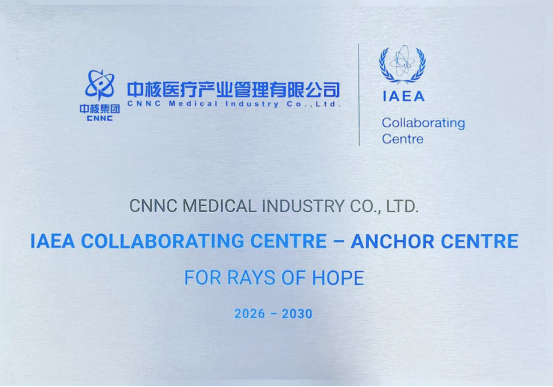
Plaque of the designation. (Photo: Zhu Qiang/CNNC Medical)
Rays of Hope Initiative
Launched in 2022, the IAEA Rays of Hope initiative aims to reduce cancer deaths worldwide by assisting Member States in establishing or expanding their capacities in radiotherapy and multimodality medical imaging.
Through the initiative, the IAEA supports countries by providing legislative guidance, capacity building for medical professionals, technology transfer and targeted support in nuclear medicine research and education.
Since 2022, the IAEA’s Rays of Hope initiative has received requests for support from over 100 Member States, demonstrating growing demand for cancer care services and driving the expansion of life-saving cancer treatment services in underserved regions.